“Private credit default. $100 million lent at 11% yield. One missed payment… and suddenly, everything changes.”
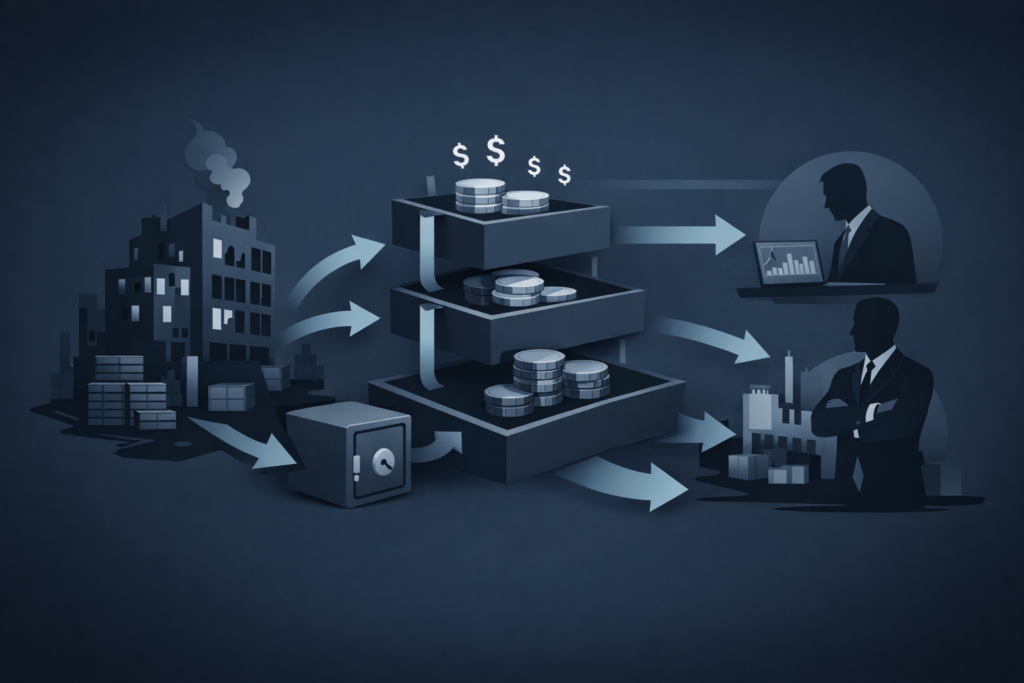
You’re no longer just a lender.
You’re a workout specialist. A restructuring advisor. Sometimes—even the owner.
That’s the reality of a private credit default—far removed from the polished narratives of “stable yield” and “downside protection.”
This article breaks down what actually happens when a private credit default occurs—through structure, numbers, and real-world dynamics.
🔹 What is a Private Credit Default? (Quick Refresher)
A private credit default occurs when a borrower fails to meet agreed obligations under a privately negotiated loan.
This could include:
- Missed interest or principal payments
- Covenant breaches
- Liquidity shortfalls
- Cross-default triggers
Unlike public markets, a private credit default is:
- Not immediately visible
- Not always formally declared
- Often strategically managed
This is where private credit fundamentally differs from traded debt.
🔹 Understanding Private Credit Structures Before Default
To understand a private credit default, you must first understand the structures that govern it.
1. Unitranche Structures
- Blended senior + subordinated risk
- Single facility, single pricing
- Internal agreements define priority
👉 In a private credit default, hidden subordination becomes visible.
2. Senior Secured Loans
- First lien on assets
- Priority repayment rights
But during a private credit default:
👉 Collateral realization—not documentation—drives recovery.
3. HoldCo vs OpCo Risk
- OpCo generates cash
- HoldCo holds equity
In a private credit default, this becomes critical:
👉 If lenders sit at HoldCo, access to cash flows may be restricted.
4. Intercreditor Complexity
Multiple lenders = multiple rights.
During a private credit default, the key question becomes:
👉 Who controls enforcement and cash?
🔻 Step-by-Step: What Happens During a Private Credit Default
Step 1: The Private Credit Default is “Managed”
A borrower misses a payment.
But instead of immediate enforcement:
- Lenders issue notices
- Default may be softened as “potential”
- Negotiations begin
Why?
Because in a private credit default, timing is everything.
Step 2: Cash Flow Waterfall Tightens
Once a private credit default is triggered:
Cash flow control shifts dramatically.
🔹 Example: Cash Flow Waterfall in Private Credit Default
- Operating inflow: $10M
- Expenses deducted
- Remaining cash enters controlled account
Then:
- Senior interest paid
- Fees covered
- Principal (if possible)
- Equity receives nothing
👉 This is cash dominion—a defining feature of a private credit default.
Step 3: Lenders Take Control
In a private credit default, lenders:
- Increase reporting frequency
- Engage advisors
- Influence operational decisions
They evolve into:
Active participants in business survival
Step 4: Amend & Extend (Default Playbook)
The most common outcome of a private credit default is restructuring:
- Extend maturity
- Increase pricing
- Add PIK interest
- Reset covenants
This avoids immediate value destruction.
But it also changes the economics of the deal.
🔻 Simple Example: Private Credit Default Impact on Returns
Initial Deal
- Loan: $100M
- Yield: 11%
- Expected income: $11M
During Private Credit Default
- Cash flow drops to $6M
- Partial interest converted to PIK
- Maturity extended by 2 years
- Yield increased to 14%
Reality Check
Despite higher pricing:
👉 Delayed cash + uncertainty = lower IRR
Your 11% deal may now deliver:
➡ 7–9% effective return
This is the hidden cost of a private credit default.
🔻 Case-Based Insight: Private Credit Default in Complex Structures (Metcold-Type Scenario)
In complex, sponsor-backed platforms (similar to Metcold-style stress situations), a private credit default exposes structural weaknesses.
Key Challenges:
- Multi-entity structures
- Cross-collateral dependencies
- Capital-intensive operations
What Happens During Default:
- Cash flows fragment
- Collateral valuation becomes uncertain
- Sponsors renegotiate or step back
What Drives Recovery:
Not just legal rights.
But:
✔ Asset quality
✔ Sponsor support
✔ Market conditions
👉 A private credit default is ultimately resolved in practice—not paper.
🔻 Enforcement: When Private Credit Default Escalates
If restructuring fails:
- Lenders enforce security
- Equity is wiped out
- Ownership may transfer
But:
Enforcement in a private credit default is rarely clean or quick.
It is:
- Operationally complex
- Time-consuming
- Value-sensitive
🔻 How Private Credit Default Differs from Collateralized Loan Obligation Defaults
CLO / BSL Markets:
- Daily price discovery
- Transparent defaults
- Active trading
👉 Risk is visible and market-driven
Private Credit Default:
- Illiquid positions
- Model-based valuations
- Negotiated outcomes
👉 Risk is opaque and delayed
Key Insight:
In a private credit default:
👉 You don’t exit risk
👉 You manage it over time
🔻 The Valuation Illusion in Private Credit Default
Private credit appears stable because:
- Marks adjust slowly
- No daily pricing
- Defaults are contained
But when a private credit default materializes fully:
- Sudden write-downs occur
- NAV corrections follow
🔻 The Hard Truth About Private Credit Default
Private credit does not eliminate risk.
A private credit default transforms risk:
- From volatility → to opacity
- From liquidity risk → to recovery uncertainty
- From market pricing → to negotiation
🔻 Point of View
Private credit doesn’t remove risk.
It delays visibility.
And when a private credit default finally surfaces,
that delay becomes the real risk.
Frequently Asked Questions (FAQs) on Private Credit Default
1. What is a private credit default?
A private credit default occurs when a borrower fails to meet obligations under a privately negotiated loan—such as missing interest payments, breaching covenants, or facing liquidity issues.
Unlike public markets, a private credit default is often not immediately visible and may be managed through negotiations before being formally declared.
2. What happens immediately after a private credit default?
When a private credit default occurs, lenders typically:
- Tighten control over cash flows (cash dominion)
- Restrict equity distributions
- Increase reporting requirements
- Begin restructuring discussions
Instead of immediate enforcement, lenders focus on preserving value and stabilizing the business.
3. Do lenders always enforce collateral in a private credit default?
No. In most cases, lenders prefer restructuring over enforcement.
Enforcement (like seizing collateral or taking ownership) usually happens only when:
- Business recovery is unlikely
- Sponsor support is absent
- Cash flows deteriorate significantly
This is because enforcement can be time-consuming and value-destructive.
4. How does a private credit default impact investor returns?
A private credit default can significantly reduce returns, even if the loan is eventually recovered.
Impacts include:
- Delayed cash flows
- Conversion of interest into PIK (non-cash)
- Extended loan maturity
- Increased uncertainty
As a result, a loan initially expected to yield 10–12% may deliver lower effective IRR (e.g., 7–9% or less).
5. How is a private credit default different from defaults in CLO or public markets?
In public markets and Collateralized Loan Obligation structures:
- Defaults are visible and market-driven
- Prices adjust immediately
- Investors can exit positions
In contrast, a private credit default is:
- Illiquid and privately negotiated
- Slower to reflect in valuations
- Managed through restructuring rather than trading